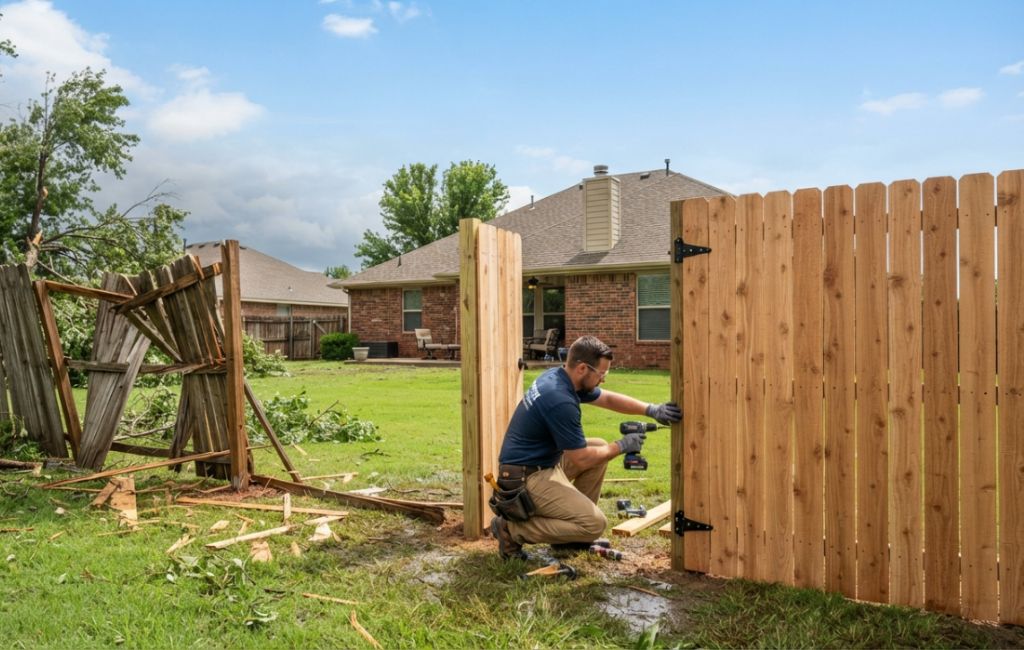
Oklahoma weather has a reputation for changing course without warning, and fences are often the first structures on a property to show the effects. High winds, hail, and sudden downpours can loosen posts, crack panels, and leave gates hanging at odd angles almost overnight. Understanding how to assess and address this kind of damage helps property owners protect their yards, pets, and privacy before small issues turn into costly rebuilds.
Homeowners searching for information on Edmond OK fences repair typically want to know two things: how severe the damage actually is, and what steps come next. Both questions deserve a closer look, especially since not every damaged fence needs to be torn out and replaced entirely.
Recognizing Storm-Related Fence Damage
Not all storm damage is obvious at first glance. A fence can look structurally sound from a distance while hiding weakened joints or shifted footings underneath.
Common Warning Signs
Several indicators tend to show up after severe weather passes through the area:
- Leaning posts or sections that no longer sit flush with the ground
- Cracked, splintered, or missing wood panels
- Loose hinges or gates that no longer latch properly
- Rust streaks on metal fencing caused by prolonged moisture exposure
- Gaps at the base where soil has eroded around post footings
Even minor shifting can worsen over time if left unaddressed, particularly when freeze-thaw cycles or additional rainfall follow the initial storm.
Choosing Between Repair and Replacement
Deciding whether a fence needs a full replacement or a targeted repair depends largely on how much structural integrity remains. A single cracked panel on an otherwise stable fence line is usually a straightforward fix, while widespread post damage often signals a bigger underlying problem.
Factors That Influence the Decision
A few practical considerations tend to guide this choice:
- Age of the fence and the condition of untouched sections
- Type of material, since wood, vinyl, and chain-link respond differently to storm stress
- Extent of soil movement around the base of the posts
- Whether damage is isolated to one area or spread across the entire perimeter
Fences under ten years old with concentrated damage are frequently good candidates for repair, while older fences with multiple failure points may benefit more from a phased replacement approach.
Materials That Hold Up Better After Storms
Not every fencing material reacts the same way to Oklahoma’s mix of wind gusts and heavy rain. Vinyl tends to flex slightly under pressure and resist moisture absorption, which reduces warping over time. Wood remains popular for its appearance but requires more frequent sealing to prevent swelling and rot after wet conditions. Metal fencing, particularly aluminum or coated steel, holds up well structurally but may need rust treatment if scratches expose bare metal to the elements.
Selecting a material suited to local weather patterns during a repair or rebuild can reduce how often future storm damage becomes a concern.
Practical Steps After a Storm
Taking a methodical approach after severe weather helps prevent further deterioration:
- Walk the fence line and photograph any visible damage for reference.
- Check post stability by gently pushing on sections to feel for movement.
- Clear away fallen branches or debris resting against panels.
- Tighten loose hardware where accessible, such as hinges and screws.
- Schedule a closer inspection for anything involving leaning posts or cracked footings, since these often require professional-grade equipment to correct safely.
Acting within the first few days after a storm, rather than waiting weeks, tends to limit how much additional shifting occurs.
FAQ
- How soon should storm damage be inspected? Within a few days is ideal, since continued rain or wind can worsen loose posts or cracked panels before repairs begin.
- Can a leaning fence be straightened without replacing the whole panel? In many cases, yes. Resetting the post and reinforcing the footing often restores stability without removing surrounding sections.
- Does insurance typically cover storm-related fence damage? Coverage varies by policy, so reviewing homeowner’s insurance details or contacting the provider directly is the most reliable way to confirm eligibility.
- How long do vinyl fences usually last compared to wood? Vinyl fencing often lasts 20 years or more with minimal maintenance, while wood fencing typically requires more frequent upkeep and may need replacement sooner depending on climate exposure.
Final Thoughts
Storm damage to fencing is a common occurrence across Edmond and the surrounding Oklahoma region, but it rarely requires guesswork to address. Identifying warning signs early, understanding which materials hold up best against local weather, and following a clear post-storm inspection routine all contribute to a longer-lasting, more resilient fence line. Property owners who stay proactive about these details tend to avoid the larger repair costs that come from delayed maintenance.